Moaksan Park, South Korea
Jan 18, 2024
Moaksan Park, South Korea
Where is Kim Il Sung's mother buried?
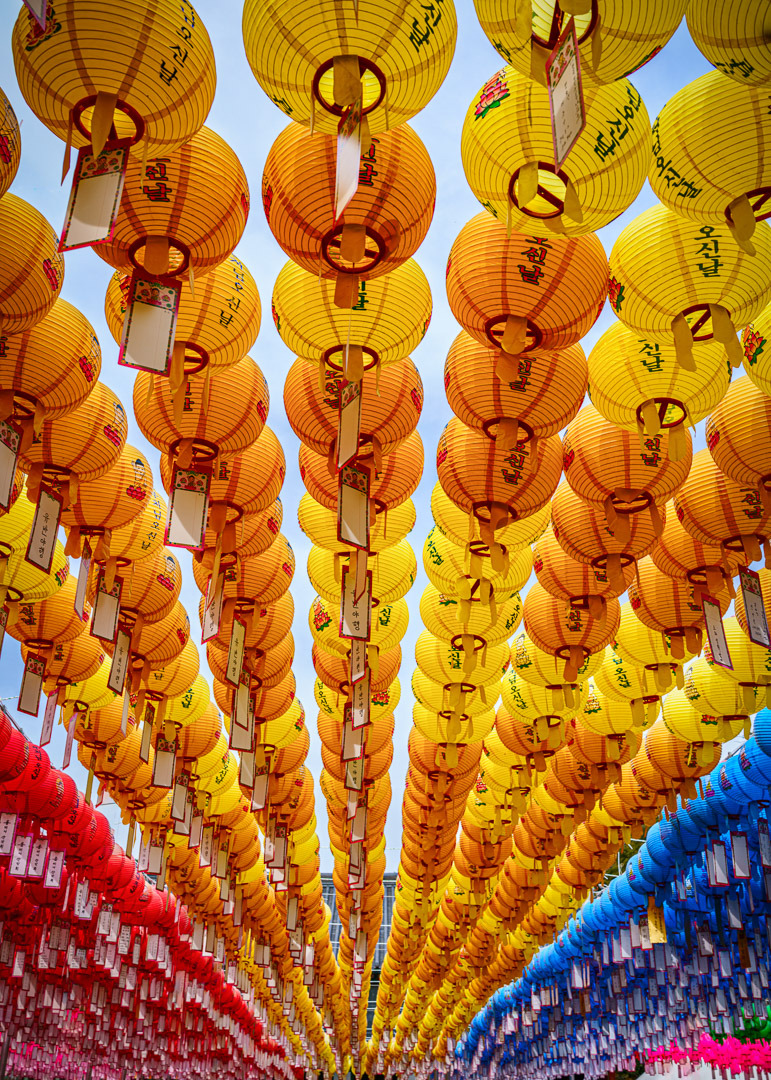
The pandemonium of colorful paper lanterns.
We rarely have a personal tour guide who knows all the best spots. As it turns out, our Airbnb host offered to be our guide for the day. We made the most of it, stopping at three different spots, all in the Korean countryside. Our second stop was Moaksan Provincial Park. Supposedly, the final resting place for the mother of former North Korean leader Kim Il Sung.
I intended to write a story for you today about this enormous park. The expansive temple compound. And the crazy scene in the parking lot. It ain't happening. I don't have it in me.
This week, I'm going to give you a photo dump. You see, I've always struggled with photographing the glorious temples of Asia. There are several things I look for when composing an image. Often, it's a primary subject or a leading line that directs the viewer's attention. Sometimes, it's an expansive scene that is calm and sublime. Chaos and busyness everywhere leave the viewer wondering where to look and what the point is. It's the chaos that is my struggle with photographing temples.
When viewing a temple, there is so much of everything, inside and out. In person, they are magnificent. All the colors, textures, tones, and reliefs leave the senses in awe. The conundrum is how to convey that sense of awe through a photo.
On this visit to Moaksan Park and the Geumsansa temple, I fitted my camera with a telephoto lens. I wanted to get close and isolate parts of the buildings and focus on specific areas. I have to say, it's tempting to use a wide lens and try to include everything in the photograph. Unfortunately, that approach has gotten me in trouble in the past.
Like I said before, I am doing a photo dump today. Meaning I'm sharing all the photos I have been working on the past week or so. It's important to note that most of the images are of elements of art that others created, which I documented.
The distinction is that art created by others and then photographed is not new art. Yet, art created by others and photographed in a setting is new art, like the two small temples pictured below. It's a subtle but important distinction. For me, it's all practice to hone my photography skills.
Oh, and Kim Il Sung's mother isn't buried there. Kang Pan Suk and her family fled to Manchuria to avoid arrest. She never returned to Korea.
With that, here are the photos. Enjoy!
At the top. Paper Lanterns cover the walkway leading to the main temple. The lanterns are always used to celebrate Buddha's birthday. But they are also displayed at any time of the year. This photo is the best of all my pictures of paper lanterns.
Below, top. This corner piece of the temple is exquisite. Unfortunately, temples have installed security systems, cameras, and electronics on the exterior walls. At the top right was a speaker, where the blue swirl now is. I deleted the speaker by copying the swirl on the left, flipping it around, and pasting it over the speaker.
Below, next. An exterior wall with a support column in the center. The artwork on these walls is fantastic. Since these areas are exposed to the elements, the paint has faded. I enhanced the colors and brought out more of the beauty. Plus, another speaker was mounted here. I used part of the wood frame to cover it.
Below, next next. Details in relief under the eves along the roof line. I cropped out the lower half of this photo to highlight the exquisite craftsmanship and detail.
Below, next next next. I am trying to remember exactly where this was located. It's a window or a doorway; I'm not sure which. The patterns in the panels and designs in the hardware are what drew me in.
Below, next next next next. This is a doorway for sure because of its location. Doorways at temples have specific uses. Typically, doors on the left side are for the Monks to use. The door in the center is for the priest. And the door to the right is for everyone else. These are Buddhist, though, so nobody pays any attention if you use the wrong door.
Finally, below. Two of the smaller temples. The one in the background is open for prayer. Usually, temple complexes have many smaller temples scattered around the compound. And if you follow a pathway into the forest or mountains, you will find more temples and Buddha carvings. The idea is to relax and contemplate nirvana wherever you are most comfortable.
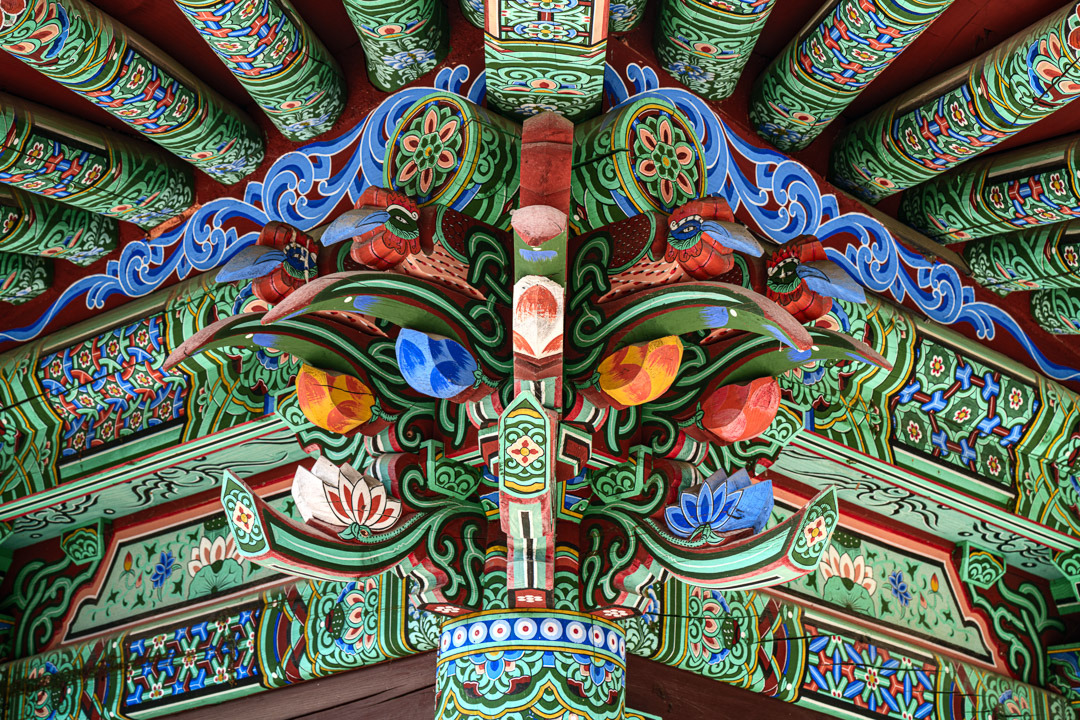
Under the roof eves is this intricate carving with beautiful painting.
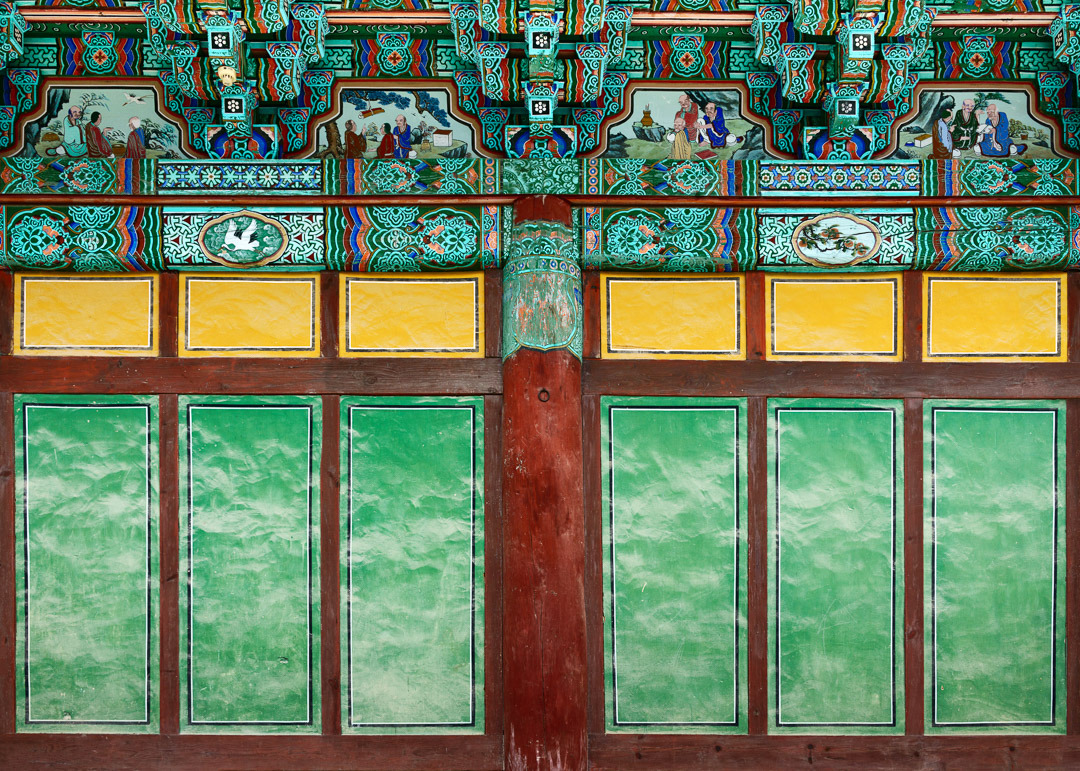
An exterior wall with a support column in the center. Notice the carvings along the top.
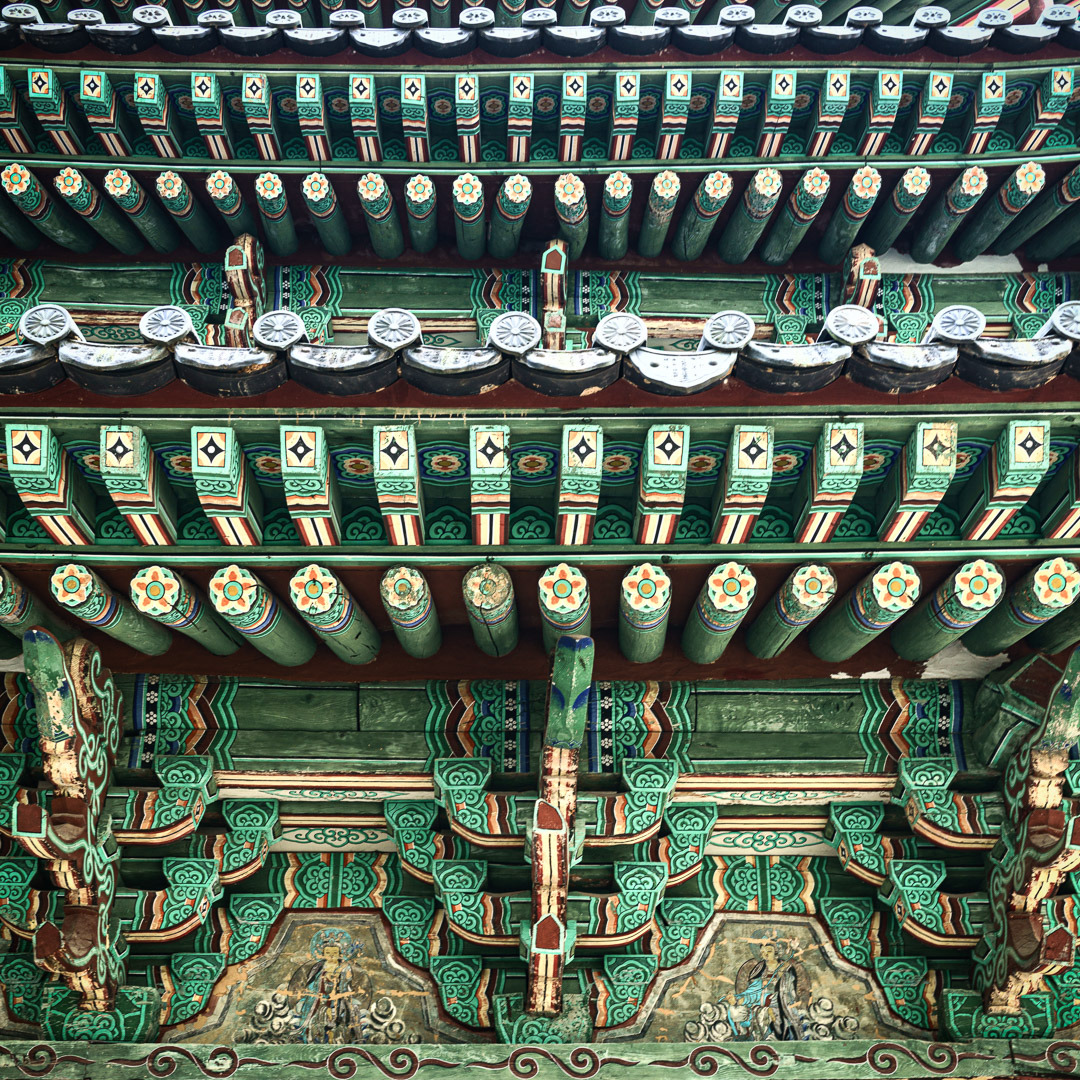
A close-up of the carvings along the top of an exterior wall.
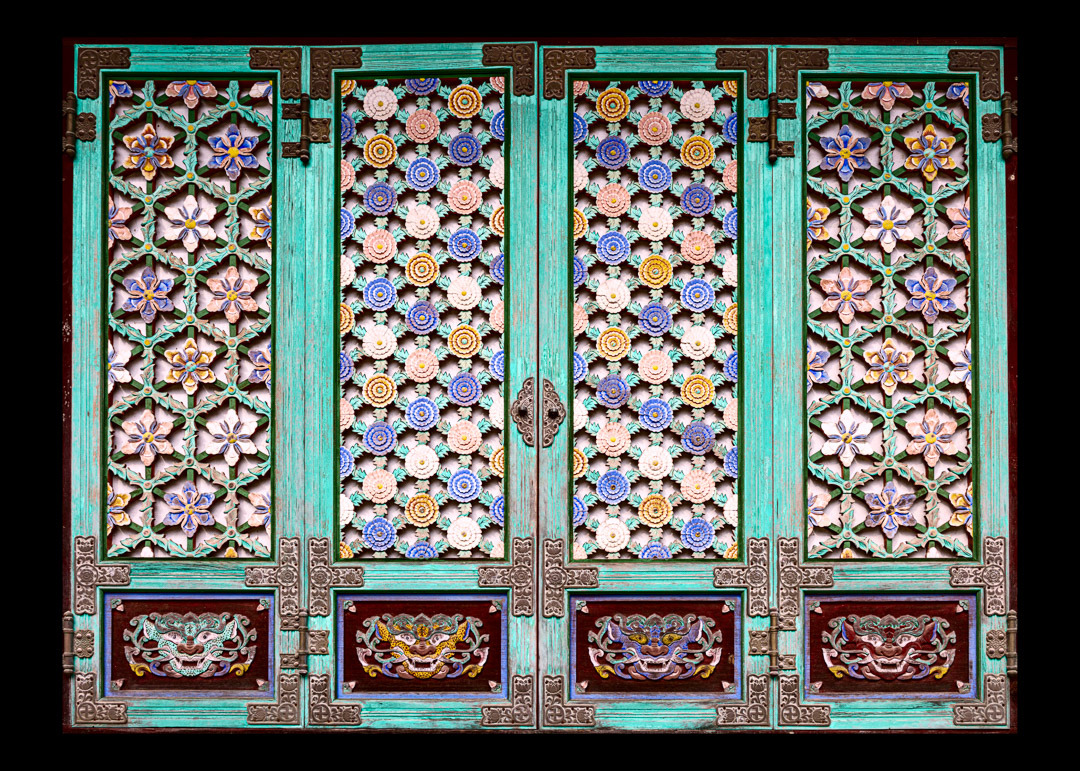
A window or doorway cover with intricate detail.
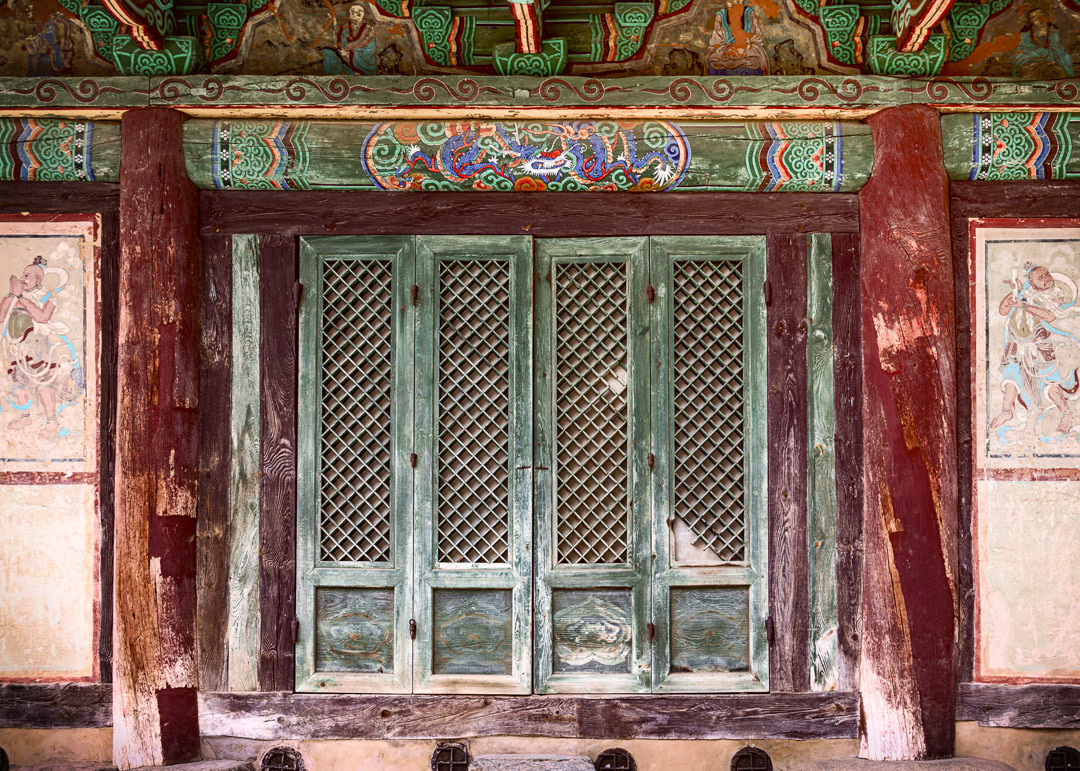
An entryway to the temple is closed off with these latticework doors.
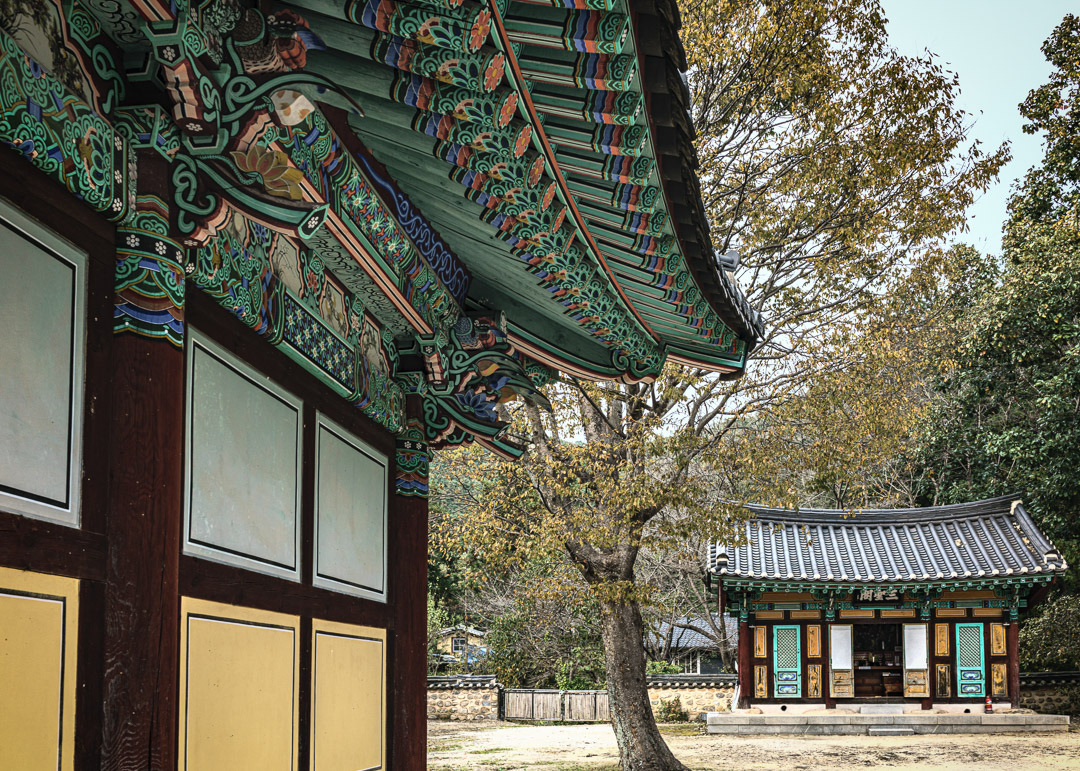
Two of the smaller temples showing the beauty of these buildings.